Wool and cashmere fibers Testing Method
1. Optical Microscopy Method
The identification of cashmere and other cashmere-like fibers using an optical microscope is primarily achieved by observing and judging the fibers' appearance characteristics. This involves examining the shape and regularity of the fiber scales, the smoothness of the scale surface, the density of the scales, the axial thickness uniformity of the fiber, and its luster. However, this method is less effective for identifying dyed or processed fibers, especially when distinguishing between cashmere and modified fine wool. After dyeing, the morphological appearance of cashmere fibers changes; the dye uptake can form a film-like coating on the fiber surface, potentially leading to misjudgment.
The following are some characteristic differences observed under a microscope between cashmere and wool fibers:

(1) Cashmere scales are thinner than wool scales. Under a microscope, light transmission is better and more uniform, fiber brightness is even, with no shadowing or protrusions. Wool fibers, however, have thicker scales, uneven light transmission, and the fiber shaft often shows shadows and protrusions.
(2) Cashmere scales fit tightly around the fiber shaft, with very small lifting angles, appearing smooth and flat. Wool scales, being thicker, have larger lifting angles, more surface protrusions, and lack a smooth feel.
(3) Cashmere scales are longer, with larger intervals between scales, resulting in a lower arrangement density compared to wool.
(4) Cashmere fiber shafts are uniform and rarely twisted. Wool fiber shafts are often uneven and exhibit more twists.
Despite these characteristic differences, they can sometimes be very subtle. Even experienced inspectors may find it difficult to accurately identify them, highlighting the limitation of optical microscopy. This method also has a relatively large margin of error, especially for modified fine wool and 80s wool, whose scale structure can be very similar to cashmere, making identification challenging.
On the other hand, this method places high demands on inspectors. Identification relies heavily on the inspector's visual judgment, introducing significant subjectivity and leading to considerable variability in results. Therefore, inspectors require a high level of skill, and the same sample often needs to be inspected multiple times by different people to ensure accuracy.
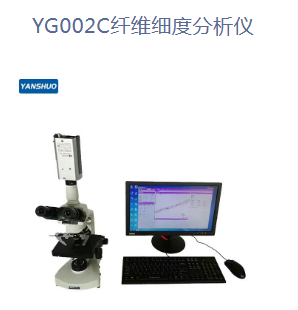
2. Scanning Electron Microscopy (SEM) and Computer Image Recognition Method
This test is based on differences in the thickness of the fiber surface scales. If the scale thickness of a fiber is greater than 0.155 μm, it should be identified as wool, while the scale thickness of special animal fibers, including cashmere, should be less than 0.155 μm. However, as mentioned earlier, the scale layer on dyed fibers inevitably thickens due to dye coverage, affecting identification accuracy. Additionally, fibers subjected to mechanical, physical, or chemical processing may have their surface scales damaged to varying degrees, causing thickness changes and also impacting the final identification result.
When using this method, it is necessary to select several parameters that can describe the characteristics of the fiber surface scales from multiple aspects and perform calculations. These parameters include scale height, length, thickness, and the ratio of scale length to height. By calculating these parameters and using the results for comparative identification, subjective human factors can be eliminated, resulting in smaller errors and achieving more objective and accurate outcomes.
3. Solution Method and Dyeing Method
The solution method distinguishes fine wool and cashmere fibers based on their different states of curl and extension in the same identification solution. Cashmere's scale layer is thinner than that of fine wool, allowing the solution to penetrate more easily into the cortical layer. Combined with the fiber's finer diameter, the solution can permeate the entire fiber. Therefore, after treatment with the same identification solution, the curl changes in the two fiber types differ, an extension difference observable under an optical microscope.
Using the different effects of alkali on cashmere and wool, quantitative analysis of cashmere/wool content has been conducted. Experimental results show that when treated in a 0.75% alkali solution at 65°C for 30 minutes, the difference in alkali solubility between cashmere and wool is greatest, at 33.3% and 16.65%, respectively. This condition can be used for quantitative analysis of cashmere/wool content and also to verify cashmere purity.
The dyeing method leverages the different dyeing properties of wool and cashmere fibers. Both wool and cashmere have good dyeing properties, but cashmere fibers exhibit a higher dye uptake rate than wool fibers. Based on this difference, fine wool and cashmere can be distinguished by using the same dye and formulation.
4. Near-Infrared (NIR) Spectroscopy Technology
NIR spectroscopy is an indirect analytical technique. It first requires obtaining basic data on target components or properties from a selected calibration sample set using conventional analytical methods. Chemometric methods are then used to establish a calibration model, ultimately enabling qualitative or quantitative analysis of unknown samples. Cashmere and wool have nearly identical chemical structures, so their original spectra appear very similar.
The standard normal variate (SNV) function provided by Vision software is used to eliminate sample inhomogeneity. NIR technology allows for the identification of cashmere and wool without destroying the sample. The operation is simple, requires no sample pretreatment, and the testing time is short. However, the accuracy of identification depends heavily on the representativeness of the database used to build the model. For widespread use, it is necessary to gradually accumulate samples and establish a fairly comprehensive database and model.
5. Biochip Method
With the rapid development of biotechnology, the crossbreeding of goats and sheep, as well as the use of genetic combinations to modify their genomes, has led to the emergence of various new cashmere and wool fibers.
Affymetrix and Argonne National Laboratory in the USA have developed a biochip containing organic substances. Because different organic substances are sensitive to different materials, recording the reactions of these substances and converting them into specific signals can achieve identification. As cashmere and wool have different structural characteristics in their DNA segments, DNA properties can potentially be used for identification. However, the high cost of this technology makes it difficult to popularize.
6. Identification Based on Bayesian Method
Based on the differences in scale shape and structural characteristics between fine wool and cashmere, a method for intelligently identifying these two fiber types exists. Grayscale images of the two fiber types are captured using a CCD system. Image processing techniques are used to convert the grayscale images into binary images with single-pixel width. Four comparison indicators describing the scale shape characteristics of the two fiber types are extracted from the binary images: fineness, scale height (or density), scale boundary perimeter, and scale display area. A Bayesian classification model for distinguishing fine wool and cashmere fibers is established based on statistical hypotheses derived from these four comparison indicators using a sample database. Simulation results show that this model has good fiber identification capability, achieving an accuracy of 83% for cashmere fibers and 90% for fine wool. The model's identification accuracy has the potential to improve further as more parameters are added.
7. Fiber Internal Crystallinity Analysis Method
Wide-angle X-ray diffraction (WAXD) and differential scanning calorimetry (DSC) have been used to study the crystalline structure of cashmere and wool fibers. Comparative analysis of diffraction peak intensities and melting enthalpies for cashmere and wool fibers leads to the conclusion that the crystallinity and α-crystallinity of cashmere fibers are higher than those of wool fibers, indicating a higher degree of macromolecular order. The crystallinity and α-crystallinity of wool fibers are 81.2% and 75.8% of those of cashmere fibers, respectively. Experiments have confirmed that identifying cashmere and wool fibers by measuring their crystallinity is feasible.
8. Identification of Dark-Colored Cashmere
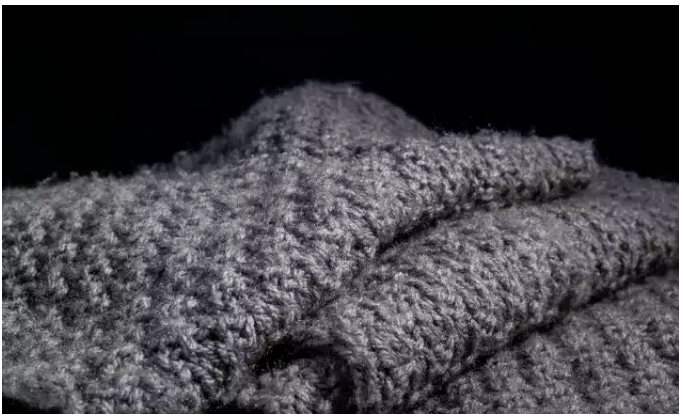
After cashmere fibers are dyed with dark shades, their original scale structure becomes completely obscured. Inspectors find it difficult to discern the fiber scale structure under a standard projection microscope, which can easily lead to misjudgment. Currently, two main methods exist for identifying dyed cashmere fabrics or fibers: identification after decolorization or direct observation using a black-and-white microscope lens.
Existing decolorization methods for cashmere primarily include decolorization with Peregal and decolorization with sodium hydrosulfite.
9. Identification of Stretch Wool and Cashmere
Identifying stretch wool and cashmere involves both qualitative and quantitative methods.
Qualitative identification mainly involves examining fiber length, fineness, strength and elongation, elasticity, crimp, chemical solubility, dyeing properties, staining properties, and scale structure. Generally, stretch wool is significantly longer than cashmere. The average fineness variation of stretch wool is greater than that of cashmere, but its elastic recovery rate, breaking strength, breaking elongation, and breaking work are inferior to cashmere fibers of the same fineness, and its dye uptake rate is also lower.
Quantitative identification involves distinguishing cashmere from stretch wool by conventional microscope observation of fiber scale edge characteristics, scale thickness, scale density, and scale shape. However, due to the similar characteristics of cashmere and stretch wool, it is difficult to identify them correctly using a single method. Sometimes, qualitative identification methods are combined, and values such as fiber impression ratio and fineness coefficient of variation are used to correct the measurement results.
10. Determination of Cashmere/Wool Blend Ratio
The identification methods for cashmere mentioned above are also applicable for determining the blend ratio of cashmere and wool.
It is worth mentioning the application of computer technology in determining cashmere/wool blend ratios.
This primarily involves computer-assisted dyeing detection methods:
(1) Conduct light absorption experiments to find suitable dyes and process conditions that maximize the color difference between cashmere and wool fibers after dyeing, facilitating identification under a standard microscope.
(2) Use a standard microscope to observe the dyeing characteristics of cashmere and wool treated under specific dyeing conditions, and measure their characteristic parameters (such as hue and purity) to obtain accurate values. To improve detection accuracy, fiber fineness can be added as a reference indicator.
(3) Analyze the above characteristic quantities using grey theory to identify the value ranges for each characteristic quantity of cashmere and wool fibers, and establish a corresponding digital detection model.
(4) Develop computer-automated detection software based on the established digital detection model.
Currently, microscopy remains the most common and practical method for cashmere identification. However, factors such as goat species variation, hybridization, and cashmere dyeing are placing increasingly high demands on the resolution of microscopes used for identification. Moreover, identification using only a microscope is time-consuming and labor-intensive. Therefore, combining microscopy with other auxiliary methods is generally considered a better approach.