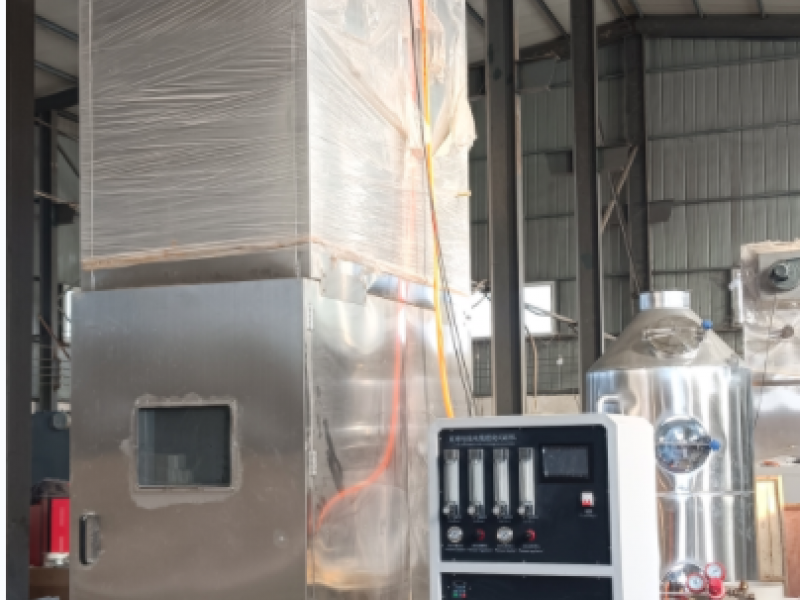
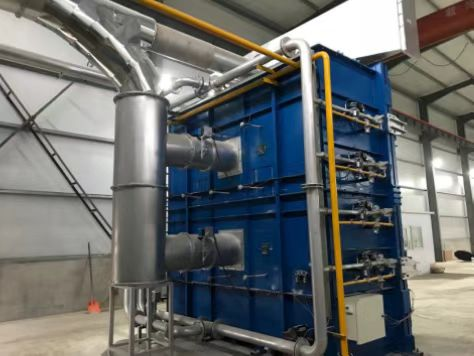
YS-GJL-4 Large-Scale Vertical Fire Resistance Test Furnace for Ventilation Ducts
Scope of Application
【Operating Instructions】
- Fire Resistance Limit Test:According to the requirements of National Standard GB/T 9978-2008, fire resistance tests must utilize open flame heating to subject specimens to flame effects similar to those in an actual fire. This test furnace simulates the actual heating process during a fire to meet the requirements for fire resistance limit testing, thereby comprehensively evaluating the fire endurance performance of the component.
YS-GJL-4 Large-Scale Vertical Fire Resistance Test Furnace for Ventilation Ducts
【Instrument Parameters】
Fire Resistance Limit Test:According to the requirements of National Standard GB/T 9978-2008, fire resistance tests must utilize open flame heating to subject specimens to flame effects similar to those in an actual fire. This test furnace simulates the actual heating process during a fire to meet the requirements for fire resistance limit testing, thereby comprehensively evaluating the fire endurance performance of the component.
Reference Standard:GB 9978-2008 "Fire-resistance tests — Elements of building construction"
Main Technical Performance Indicators:
1. Furnace Temperature ControlAccording to National Standard GB 9978, the temperature rise curve inside the test furnace must satisfy the following equation:
$$T - T_0 = 345 log_{10}(8t + 1)$$
Where:
$t$ = Time elapsed during the test (min)
$T$ = Furnace temperature at time $t$ (℃)
$T_0$ = Initial furnace temperature, which should be in the range of 5℃ to 40℃.
2. Pressure RequirementsFurnace pressure is measured at a height of 3m inside the furnace, 100mm away from the specimen surface:
a. After 5 minutes from the start of the test: Furnace pressure is 15Pa ± 5Pa.
b. After 10 minutes from the start of the test: Furnace pressure is 17Pa ± 3Pa.
3. Fire Resistance Limit Criteria
a. Loss of Integrity.
b. Loss of Insulation: Occurs when the average temperature rise on the unexposed surface exceeds the initial average surface temperature by 140℃, or when the temperature rise at any single point on the unexposed surface exceeds the initial temperature at that point by 180℃.
Technical Specifications
Furnace Type: Vertical comprehensive fire resistance test furnace
Chamber Dimensions: 3.0m × 3.0m × 1.2m
Fuel: Natural Gas or Liquefied Petroleum Gas (LPG)
Max Operating Temperature: 1300℃
Burner Quantity: 8 sets
Exhaust Gas Temperature: < 100℃
Exhaust Air Volume: ≈ 16,000 m³/h
Furnace Wall Temp Rise: < Ambient Temp + 40℃ (excluding areas around burners and observation windows)
Insulation Material: Mullite refractory bricks; Zirconium-containing cotton modules lining the flue.
Thermocouples:
Furnace Thermocouples: ±15℃
Back Surface Thermocouples: ±4℃
Moving Thermocouple: ±4℃
Ambient Thermocouple: ±1℃
Furnace Thermocouples: 9 units
Back Surface (Unexposed) Thermocouples: 30 units
Moving Thermocouple: 1 unit
Ambient Thermocouple: 1 unit
Specs: Furnace thermocouples comply with GB9978.1 and GB/T16839.1 (Nickel-Chromium/Nickel-Silicon, Type K).
Accuracy:
Interfaces: 30 reserved interfaces for back surface testing, allowing simultaneous measurement of 30 positions.
Observation Windows: 4 located on the rear wall of the furnace.
Combustion Control Mode: Proportional combustion, automatic furnace pressure control, automatic temperature regulation, programmed temperature curve control, and computer-aided management.
Exhaust Mode: Rear mechanical exhaust, connected to a water-wash dust removal tower.
Flame Retardant Series of Cables & Building Materials
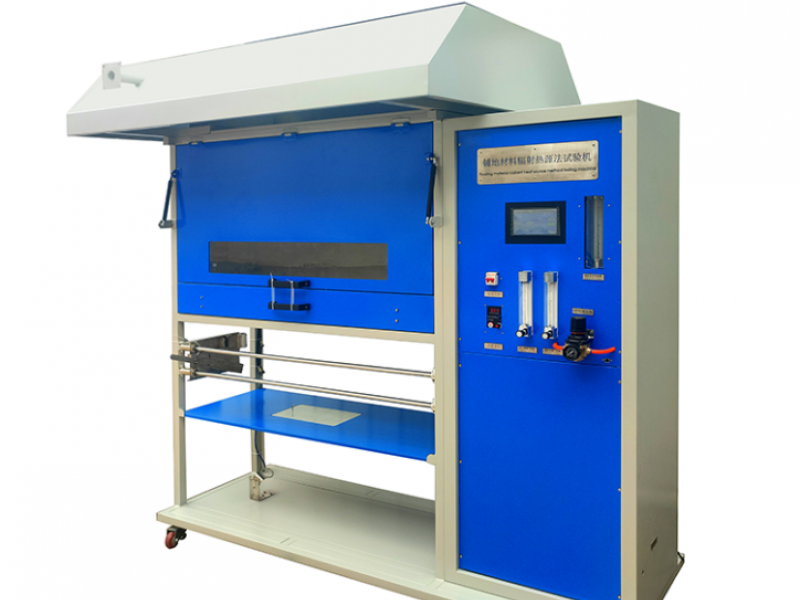
YS-JC-2 Radiant Heat Flux Test Apparatus for Flooring Materials
Flame Retardant Series of Cables & Building Materials
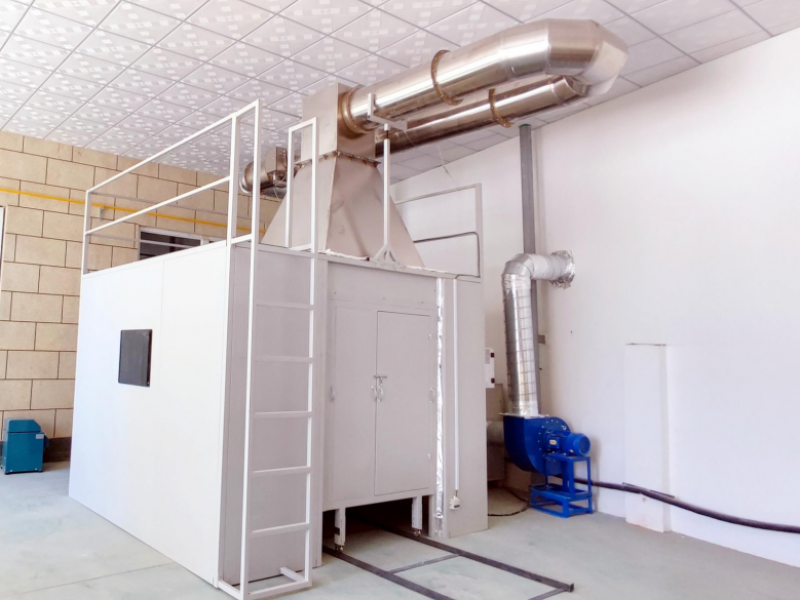
YS-JC-1 Single Burning Item (SBI) Test Apparatus for Building Materials and Products